The Moment That Changes Everything
Let’s be honest for a moment. When someone in your city feels a pull toward faith, maybe going through a hard season, asking bigger questions, or finally ready to walk through a church door, the first thing they do isn’t ask a friend. They open their phone, and your church online presence gets its first test.
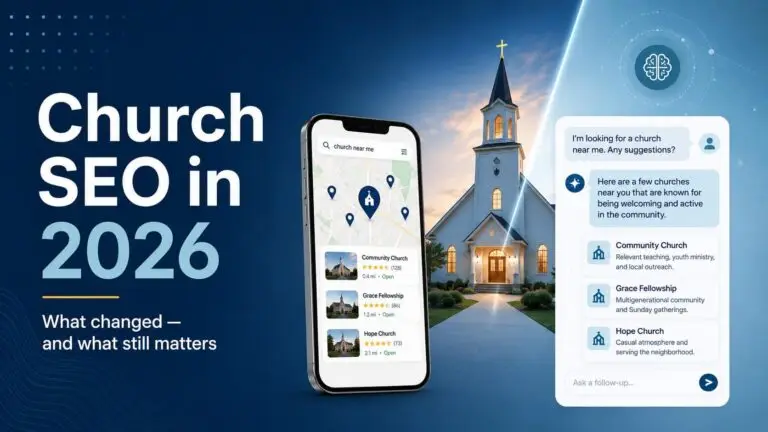
They type something like “churches near me” or “family-friendly church in [your city].” And in the next ten seconds, they’ve already formed an opinion about every church that shows up, and every church that doesn’t.
This is the digital front door. And whether your church has intentionally built one or not, it already exists. The question is simply: what does it say?
“The question isn’t whether your church has a digital presence. It’s whether that presence is working for you or against you.”

Why We Started ChurchFound
The Gap We Kept Seeing
ChurchFound exists because we kept seeing the same story play out. A pastor pours their heart into Sunday. The worship is genuine. The community is real. The preaching is faithful. But outside of those four walls, almost no one knows the church exists.
Meanwhile, people in that very same zip code are searching for exactly what that church offers, and they’re finding nothing. Or worse, they’re finding a website that hasn’t been updated since 2017 and a Facebook page with three posts from two years ago.
Our Mission
That gap between the vitality of a local church and its visibility online is the problem we’re here to close. Our mission is to help churches create clear digital pathways that connect people to a local church and encourage spiritual growth in community. Because we believe the local church is one of the most beautiful things on earth, and more people deserve to find it.
Why a Church Online Presence Matters
Here’s what the research tells us: roughly 70% of first-time church visitors say they checked out a church’s website before they ever attended in person. Read that again. Seven out of ten people made a preliminary decision about your church before they set foot inside.
And it’s not just websites. People are searching on Google Maps, checking Instagram, watching sermon clips on YouTube, reading reviews, and looking for your church on Spotify or Apple Podcasts. The digital journey to your church starts long before the parking lot.
For church planters and launch teams, this is especially critical. You may be months away from your first public service, but people in your community are searching right now. An early digital presence isn’t a nice-to-have. It’s part of your launch strategy.
What “Showing Up” Online Actually Means
When we talk about a church online presence, we’re not asking you to become a content machine or hire a full marketing team. We’re talking about the basics, done with clarity and care:
- A clear, welcoming website that answers the questions a first-time visitor actually has: Where are you located? What time are services? What should I expect? Is there something for my kids?
- A Google Business Profile that makes you findable when people search your area, shows your hours, and points directly to your website.
- An active social media presence that gives people a genuine window into your community. Not a polished ad, but a real glimpse of who you are.
- A place for your sermon content, whether that’s a podcast, YouTube channel, or simple audio recordings so people can engage with your teaching before they ever visit.
None of these require a massive budget. They require clarity, consistency, and someone with a plan. That’s where we come in.
The Confusion Is Real (And That’s Okay)
We hear it all the time from pastors and church leaders: “I know we need to do something online, I just don’t know where to start.” Or: “We have a website, but I have no idea if it’s actually helping us.” Or honestly: “We’ve tried a few things but nothing ever sticks.”
If that’s you, you’re not behind. You’re not failing. You’re leading a church, which means your bandwidth is already spoken for in about fifteen different directions. Digital strategy is a specialty, and it’s okay to need a guide.
“The most effective digital presences are built with a clear strategy, not just activity. It’s not about posting more. It’s about being found by the right people and giving them a clear next step.”
The good news is that you don’t need to figure this out alone, and you don’t need to overhaul everything at once. Start with what matters most, build from there, and let strategy lead the way.
A Clear Pathway Changes Everything
What Happens When People Find You Online
Think about what happens when someone finds your church online and immediately understands who you are, where you’re located, and how to take a next step. They show up on Sunday not as a stranger, but as someone who already feels a connection. They’ve watched a welcome video. They know what to expect. They’ve already decided to give it a chance.
That’s the power of a clear digital pathway. It removes friction. It builds trust before the first handshake. And it means the work you’ve already put into your church (the community, the teaching, the culture you’ve built) gets a chance to reach the people it was always meant to reach.
This is why ChurchFound exists. Not to put technology in front of the mission, but to use it in service of the mission. The gospel travels through people and community, but today, the road to those people often starts with a search bar.
What’s Coming on This Blog
Over the coming weeks and months, this blog will be a practical resource for pastors, executive pastors, communications directors, and church launch leaders who want to grow their church’s digital presence with clarity and purpose.
We’ll cover things like:
- How to build a church website that actually converts first-time visitors
- What to post on social media, and what to skip
- How to set up and optimize your Google Business Profile so your church shows up locally
- SEO basics every church should know, in plain language, not tech jargon
- How to create a simple digital strategy that your team can actually execute
No fluff. No jargon you have to Google afterward. Just practical, actionable guidance, written for people who love the local church and want to see it thrive.
Not sure what your church’s digital front door says right now? Get a free church visibility audit and we’ll show you what’s working and what to fix first.